
Custom Home Builder vs. Production Builder: What Meridian Homeowners Should Know
QUICKANSWER: A production builder works from a set catalog of pre-drawn floor plans repeated across many homes in a single development, while a custom home builder designs a home around one specific lot, one household's lifestyle, and preferences the owner sets from the start. Production builders typically move through construction faster because plans, materials, and site conditions are already standardized across the neighborhood. Custom builders spend more time up front on design and site evaluation, but that time buys control over layout, room sizes, and how the finished home actually performs on its particular piece of ground. For a Meridian homeowner working with a lot that has slope, drainage quirks, or unusual dimensions, that site-specific approach often matters more than it would in a flat, uniform subdivision. The right fit comes down to how much control you want over the outcome versus how closely your vision already matches a standardized plan.
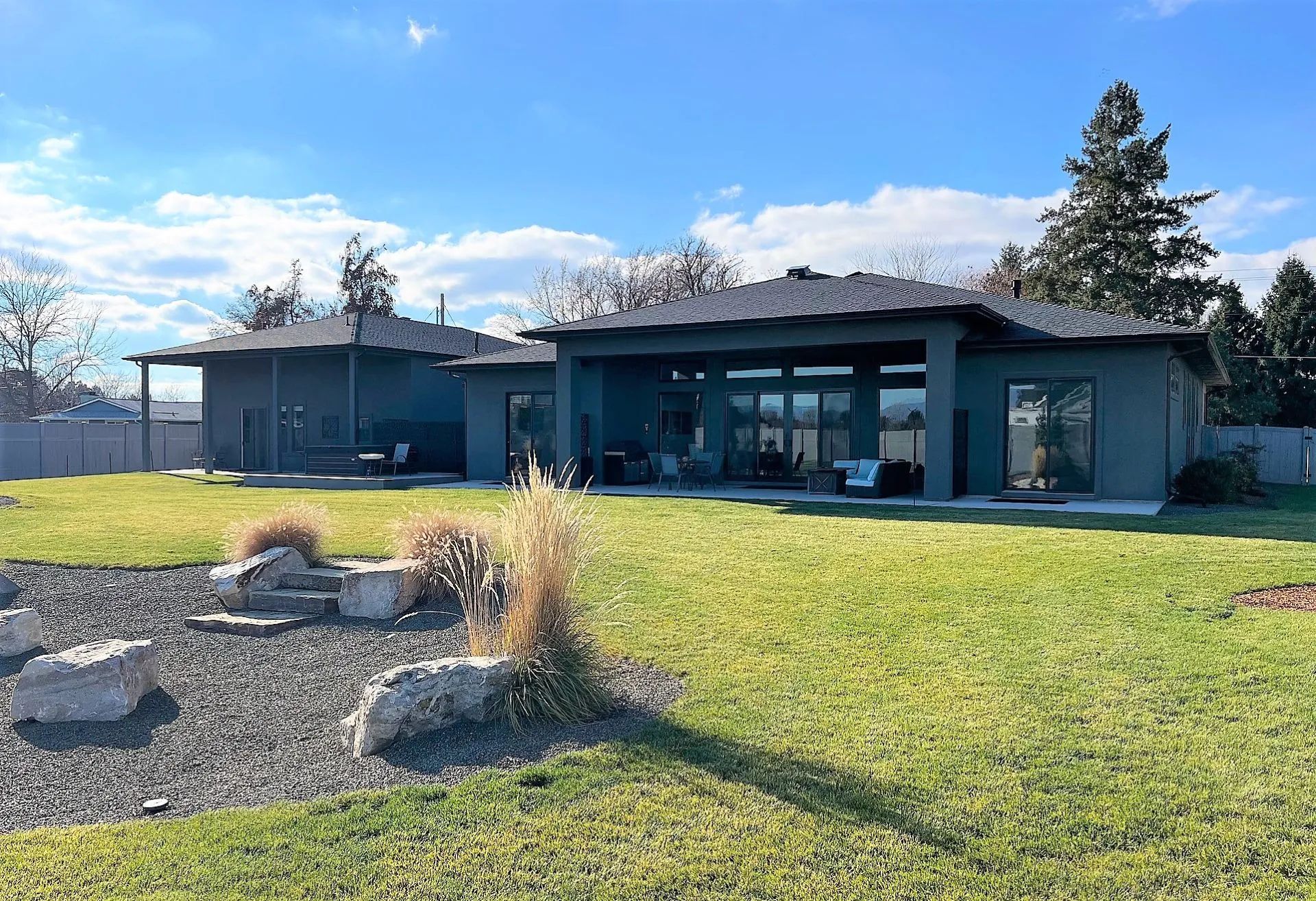
Drive through a newer subdivision in Meridian and a pattern shows up fast. The same handful of rooflines repeat down the block, three or four floor plans get mirrored and flipped to break up the monotony, and a sales office sits where a construction trailer might otherwise be. That is production building, and for a lot of households it works well. A few miles away, on an infill lot in an established neighborhood or an acreage parcel on the edge of the valley, a different kind of project is underway. It is a home designed from a blank page around one family's lot and one family's way of living. Neither approach is better in every situation. They serve different goals, and knowing which one matches yours starts with understanding how the two actually differ.
What Actually Separates a Custom Build From a Production Build
The terms get used loosely, so it helps to define them plainly before comparing anything else.
Floor Plans
A production builder maintains a set catalog of plans and builds the same handful of layouts repeatedly across a development, sometimes with a short list of approved modifications. A custom builder starts each project with a blank sheet, drawing a floor plan around the lot and the household that will live in it, with no repeated template in the background.
Decision-Making
With a production home, most of your input happens inside a design center, choosing finishes and fixtures from a pre-approved list within walls that are already fixed. With a custom home, you are involved in decisions that shape the structure itself, including room adjacencies, ceiling heights, window placement, and how the house sits on the lot.
The Lot Itself
Production communities are typically built on lots that were graded and prepared as a group before any home plans were assigned to them. Custom builds start with an individual site evaluation, because no two lots in the Treasure Valley behave the same way once soil, drainage, and sun orientation are accounted for.
How the Design Process Differs
A production build's design process is mostly a selection process. You pick a base plan, choose from a defined set of upgrades and finish packages, and the builder's team applies those choices to a plan they have built many times before. It is efficient because so much of the decision-making has already been made for the neighborhood as a whole.
A custom build starts earlier and involves more back and forth. The process typically opens with a site walk and a conversation about how your household actually uses space, followed by multiple rounds of floor plan development before construction begins. That extra round of planning is where a custom builder earns the label. Instead of fitting your life into an existing layout, the layout gets built around your life.
TIP: Walk the actual lot with your builder before finalizing any floor plan, custom or production. A layout that reads well on paper can behave differently once grade, sun path, and the position of neighboring structures are accounted for in person.
Material and Construction Choices
Production builders achieve efficiency partly through standardized material selections. Buying the same framing package, windows, and finish materials across dozens of homes in a development simplifies scheduling and keeps every crew working from the same specifications. That consistency is a real advantage when a household is happy with the standard package.
A custom builder selects materials on a per-project basis, matched to that specific home's structural needs and the way the household plans to use each space. In the Treasure Valley, that can mean different framing and insulation approaches depending on a lot's sun exposure, or different drainage solutions depending on soil type and grade. The tradeoff is a longer selection process in exchange for choices matched to that one home rather than a subdivision average.
WARNING: Running cable inside a wall cavity near a firebox or chimney is not a spot to improvise. Heat, clearance, and the type of cable all matter for safety, and a wire tucked too close to the fire is a real risk. Have this part handled by a pro who knows how to route it correctly rather than snaking an extension cord up behind the stone.
Timeline and Flexibility During the Build
Production timelines tend to move faster once ground breaks, since the plans are already engineered, permitted in batches, and built by crews who repeat the same sequence of work across multiple homes in the same development. Predictability is the selling point.
Custom timelines carry more variability, especially during design and permitting, because each plan goes through its own review with the building department that has jurisdiction over that address, whether that is the City of Meridian or another Ada County authority. Once construction starts, though, custom builds often allow more flexibility to adjust details as the project progresses, within the limits of what has already been built. Homeowners weighing the two approaches should think about which matters more: a shorter, more predictable timeline, or more room to shape the outcome as the project unfolds.
WARNING: Running cable inside a wall cavity near a firebox or chimney is not a spot to improvise. Heat, clearance, and the type of cable all matter for safety, and a wire tucked too close to the fire is a real risk. Have this part handled by a pro who knows how to route it correctly rather than snaking an extension cord up behind the stone.
Why Lot Conditions Matter More in Meridian and the Treasure Valley
Ada County covers a wide range of lot types. Newer development lots on the valley floor tend to be flat and pre-graded, which is exactly the kind of site a production floor plan was designed for. Infill lots in older Meridian neighborhoods and acreage parcels toward Star, Kuna, or the foothills often come with their own grade changes, drainage patterns, and orientation quirks that a repeated floor plan was never drawn to address.
This is where the custom approach tends to show its value most clearly. A site-specific design process accounts for how water moves across a particular lot, where the sun falls at different times of day, and how a home should sit relative to its neighbors and the street. A production plan dropped onto an unusual lot can work, but it is working around the site rather than with it.
WARNING: Running cable inside a wall cavity near a firebox or chimney is not a spot to improvise. Heat, clearance, and the type of cable all matter for safety, and a wire tucked too close to the fire is a real risk. Have this part handled by a pro who knows how to route it correctly rather than snaking an extension cord up behind the stone.
Matching the Approach to Your Goals
If your priority is a proven layout, a shorter path from decision to move-in, and a lot within a planned community that was already prepared for that kind of build, a production home is a reasonable fit. If your priority is a specific lot, a layout that does not exist in any catalog, or a home built around the particular way your household moves through a day, a custom build gives you the control to get there. Some homeowners land in between, working with a builder who offers a base plan that can still be adjusted for a specific site. The right answer depends less on which builder type sounds better and more on how closely your lot and your goals already match what a standardized plan can offer.
Frequently Asked Questions About Remodeling And Building Costs
Can a production builder build on a lot I already own in Meridian?
Most production builders work within developments they control, so an outside parcel usually falls outside their process. A custom builder is better positioned to work with a lot you already own.
How much design input do I actually get with a production home?
Design input with a production home is typically limited to design center selections, like flooring and fixtures, applied to an already fixed floor plan. Structural changes are usually not part of that.
Is a custom home always bigger than a production home?
Size is not what defines the difference. A custom home can be modest while a production home is large. The distinction is who designed the plan and how closely it fits one household.
Do custom home projects in Meridian go through permitting differently than production homes?
Every home in Ada County goes through review with the jurisdiction over that address. Production homes are often permitted in batches, while custom homes are typically reviewed individually since each plan is unique.
How long does a custom home take compared to a production home?
Production homes generally move faster once construction starts, since plans and materials were already standardized. Custom homes take longer during design and permitting, since each plan is created and reviewed individually.
Can I still make changes once a custom home is under construction?
Some flexibility remains during a custom build, particularly before framing and systems lock in, though later changes affect the schedule more. A production home offers far less room once construction begins.
WARNING: Running cable inside a wall cavity near a firebox or chimney is not a spot to improvise. Heat, clearance, and the type of cable all matter for safety, and a wire tucked too close to the fire is a real risk. Have this part handled by a pro who knows how to route it correctly rather than snaking an extension cord up behind the stone.
Choosing the Build That Matches Your Lot
The difference between a custom build and a production build is not about which one is inherently better. It comes down to how much control a homeowner wants over the design process, how unusual or typical the lot happens to be, and how closely a household's daily patterns match what a repeated floor plan can already offer. Understanding that distinction before the first shovel goes into the ground is what keeps a Meridian homeowner from discovering the mismatch halfway through.
True North Custom Homes & Remodeling
has spent 34
years designing homes around individual lots and households across Meridian, ID, and the surrounding Treasure Valley. That experience shapes how each project starts, with a site evaluation rather than a catalog plan. A lot with its own grade, orientation, and character is usually best served by a design built around it from the very beginning.
Recent Posts